
A gap between your front teeth can be charming, but for many people it’s a source of self-consciousness that shows up in every photo. The good news? Yes, a gap between your front teeth can be closed with braces or Invisalign, and both options deliver beautiful, lasting results when planned by an experienced orthodontic specialist. Understanding your options is the first step toward deciding what’s right for your smile, your lifestyle and your budget.
What Is a Diastema (Gap Between Front Teeth)?
A diastema is a visible space between two teeth, most commonly seen between the upper central incisors (the two front teeth). Gaps can range from a barely-there sliver to a wide space that changes the look of your entire smile. While some people love their gap, others want it closed, and orthodontics offers safe, predictable ways to do exactly that.
Several things can cause a diastema:
- A mismatch between tooth size and jaw size, leaving extra room between teeth
- A thick or low labial frenum (the tissue connecting your upper lip to your gum)
- Missing or undersized teeth that leave neighboring teeth to drift apart
- Gum disease that weakens the bone supporting the teeth
- Childhood habits like thumb sucking or prolonged pacifier use
Gaps aren’t only a cosmetic concern. Food can pack into the space, bite function may be affected and in some cases speech can be impacted too. Both metal braces and Invisalign clear aligners are proven treatments for closing diastemas. The size of the gap and its underlying cause help Dr. Diana and Dr. Neil at New England Orthodontic Specialists recommend the right path for you.
How Braces and Invisalign Close Front Tooth Gaps
Both braces and Invisalign close gaps by applying gentle, controlled pressure that slowly slides teeth toward each other until the space disappears. The method looks different, but the science of tooth movement is the same, and both options are highly effective when guided by a board-certified orthodontist.
Here’s how each option works:
- Braces use brackets bonded to each tooth, connected by an archwire that pulls teeth into their new positions. Small elastics may be added to guide specific movements, and the system works around the clock without you having to do anything.
- Invisalign clear aligners come as a series of custom-made trays. Each one moves your teeth a small, planned amount, and you switch to the next tray about every one to two weeks.
- Attachments (small tooth-colored bumps) are often placed on specific teeth during Invisalign treatment so the trays can grip and close gaps predictably.
- Elastics or IPR (interproximal reduction, a light polishing between teeth) may be used with either option to fine-tune the bite as the gap closes.
- Digital 3D scans map every tooth movement from day one to the final smile, so you can see the projected outcome before treatment even starts.
- Regular check-ins at one of our North Shore offices let Dr. Diana or Dr. Neil confirm that teeth are tracking as planned and adjust your treatment plan if needed.
Benefits of Fixing a Front Tooth Gap
Closing a front tooth gap does a lot more than change the look of your smile. The benefits ripple into daily life, long-term oral health and how confident you feel in every conversation.
How Does Closing a Gap Improve Oral Health?
Daily hygiene gets simpler and more effective once a front tooth gap is closed. Gaps trap food particles and plaque in ways regular spaces don’t, and food packing between front teeth can irritate the gums over time and contribute to periodontal issues. A properly aligned smile reduces this risk and makes brushing and flossing feel less like a chore.
Here’s what else patients notice on the oral health side:
- Better bite alignment. Front tooth gaps often come with uneven pressure during chewing. Closing them helps distribute bite forces evenly, which can protect your enamel from premature wear.
- Clearer speech. Some patients with front tooth gaps notice whistling, lisping or air escaping during certain sounds. Many report smoother speech once the gap is closed.
- Long-lasting results. With consistent retainer wear after active treatment, your new smile stays put. Retention is the secret to keeping that gap from reopening.
What Confidence Benefits Can You Expect?
A more balanced, photo-ready smile is one of the most common reasons patients choose to close a diastema. Once the gap closes, your smile feels more even and symmetrical, which can boost confidence at work, in social settings and in every photo.
Closing a gap isn’t just about appearance. It’s about feeling free to laugh, speak and be yourself without a second thought.
Braces vs. Invisalign for Gap Closure: Side-by-Side Comparison
Both options close front tooth gaps effectively. The right choice depends on gap size, lifestyle and personal preference. Here’s how metal braces, clear braces and Invisalign clear aligners compare for diastema treatment:
| Factor | Metal / Clear Braces | Invisalign Clear Aligners |
|---|---|---|
| Visibility | Metal braces are visible; clear braces are more subtle | Nearly invisible when worn |
| Treatment time (small gaps) | Typically 3 to 6 months | Typically 3 to 6 months |
| Treatment time (complex cases) | 12 to 24 months | 12 to 24 months |
| Comfort | Brackets may occasionally irritate cheeks and lips | Smooth plastic with no brackets or wires |
| Effectiveness for large gaps | Excellent, especially for complex rotations and bite issues | Excellent for small-to-moderate gaps; works for larger cases with attachments |
| Lifestyle flexibility | Fixed in place and always working | Removable for meals, special photos and brushing |
| Oral hygiene | Requires special floss threaders or water flossers | Remove to brush and floss normally |
| Maintenance | Avoid sticky and hard foods | Clean aligners daily; wear 20 to 22 hours per day |
| Follow-up visits | Regular visits for wire adjustments | Fewer office visits, with periodic check-ins |
For small, isolated front tooth gaps, both options can deliver stunning results on a similar timeline. For patients with multiple spacing issues or a complex bite, braces sometimes offer the most predictable control. Dr. Diana and Dr. Neil will walk you through the pros of each during your free consultation, including a look at before and afters from similar cases to help you picture your own outcome.
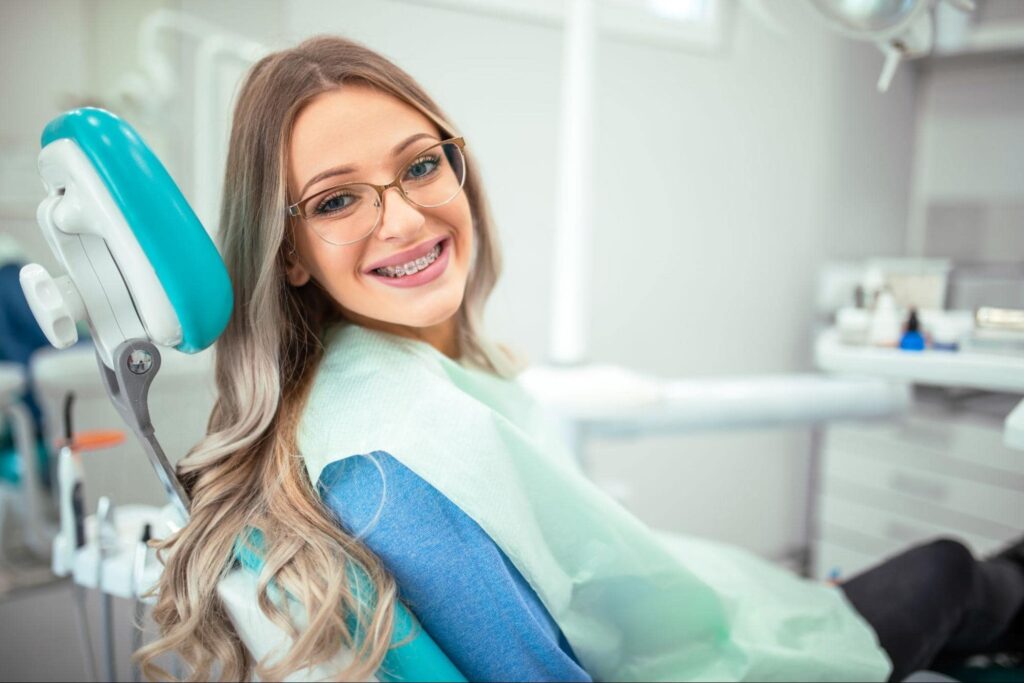
Cost Factors for Closing a Gap With Braces or Invisalign
Cost is one of the first questions patients ask, and the honest answer is that it depends on several factors specific to your smile. Rather than quoting a single number, here are the main things that influence the price of diastema treatment:
- Gap size and complexity. An isolated small gap between two front teeth is usually a shorter, more affordable case than a smile with multiple spaces or bite issues to address at the same time.
- Treatment length. Longer cases require more aligners or more adjustment visits, which affects overall fees for both braces and Invisalign.
- Type of appliance. Metal braces are typically the most budget-friendly option, while clear braces and Invisalign clear aligners vary more by case.
- Insurance benefits. Many plans include orthodontic coverage that can apply to braces or Invisalign. New England Orthodontic Specialists accepts all insurance plans, and our team can help you understand your benefits.
- Flexible payment options. We offer flexible payment plans and easy financing, and HSA or FSA funds can often be used toward treatment.
- Retainers. After active treatment, retainers protect your results. We’ll go over your retainer plan before you start.
During your free consultation, we’ll give you a clear, personalized estimate so you know what to expect before you start your new smile.
Who Is a Good Candidate for Each Option?
Most patients with a front tooth gap are candidates for both braces and Invisalign. The best fit depends on the gap itself, your daily habits and your overall oral health. Dr. Diana Esshaki and Dr. Neil Flückiger use digital imaging and a thorough clinical exam to make a personalized recommendation.
Here’s a quick guide to candidacy:
- Invisalign is often ideal for small-to-moderate gaps in patients who can commit to wearing aligners 20 to 22 hours a day. Teens and adults who want a discreet option love this route. As Diamond Invisalign Providers, Dr. Diana and Dr. Neil have deep experience planning aligner cases of all kinds.
- Braces are often preferred for larger gaps, multiple spacing issues or complex bite corrections. They work around the clock without relying on patient compliance.
- Age is rarely a barrier. We treat kids, teens and adults every day.
- Patients with missing teeth may need additional care such as implants or bridges alongside orthodontic treatment to achieve the best long-term result.
- Active gum disease should be treated before starting either option to protect the supporting bone and tissue.
- A free consultation with digital imaging at any of our North Shore offices is the clearest way to confirm which option is right for your smile.
To schedule, call 978-922-3462 or book your free consultation online at any of our five North Shore offices in Beverly, Topsfield, Hamilton, Salem or Lynn. We can’t wait to meet you.
Frequently Asked Questions
Will braces fix the gap in my front teeth?
Yes. Braces are highly effective at closing gaps of all sizes, from a small diastema between the two front teeth to larger spaces spread across the smile. The brackets and archwire apply steady pressure that slides teeth together over time, and your orthodontist can fine-tune the movement with elastics as needed. Small gaps often start closing within the first few months of treatment.
How long does it take to close a front tooth gap?
For small, isolated gaps, treatment often takes 3 to 6 months with either braces or Invisalign. Larger gaps or cases that involve bite correction typically run 12 to 24 months. Your exact timeline depends on the size of the gap, the cause and how your teeth respond to treatment. Dr. Diana and Dr. Neil will give you a personalized estimate during your free consultation.
Is Invisalign worth it for closing a gap?
For most patients, yes. Invisalign clear aligners deliver results comparable to braces for gap closure, with the added benefit of being nearly invisible and removable for meals and photos. If discretion and flexibility matter to you, Invisalign is often well worth it.
What age is too early for braces?
The American Association of Orthodontists recommends that children have their first orthodontic evaluation by age 7. That doesn’t mean treatment starts then. Early evaluation simply allows your orthodontist to spot developing issues and plan the ideal timing. Some kids benefit from early intervention, while others wait until all permanent teeth have come in. Age is rarely a barrier to closing a gap.
Will my gap come back after treatment?
It can if retainers aren’t worn as prescribed. Front tooth gaps have a natural tendency to reopen because of the way lip, tongue and cheek forces interact with the front teeth. Wearing your retainer exactly as Dr. Diana or Dr. Neil instructs is the single best way to keep your new smile. It’s a small daily habit for results that last.