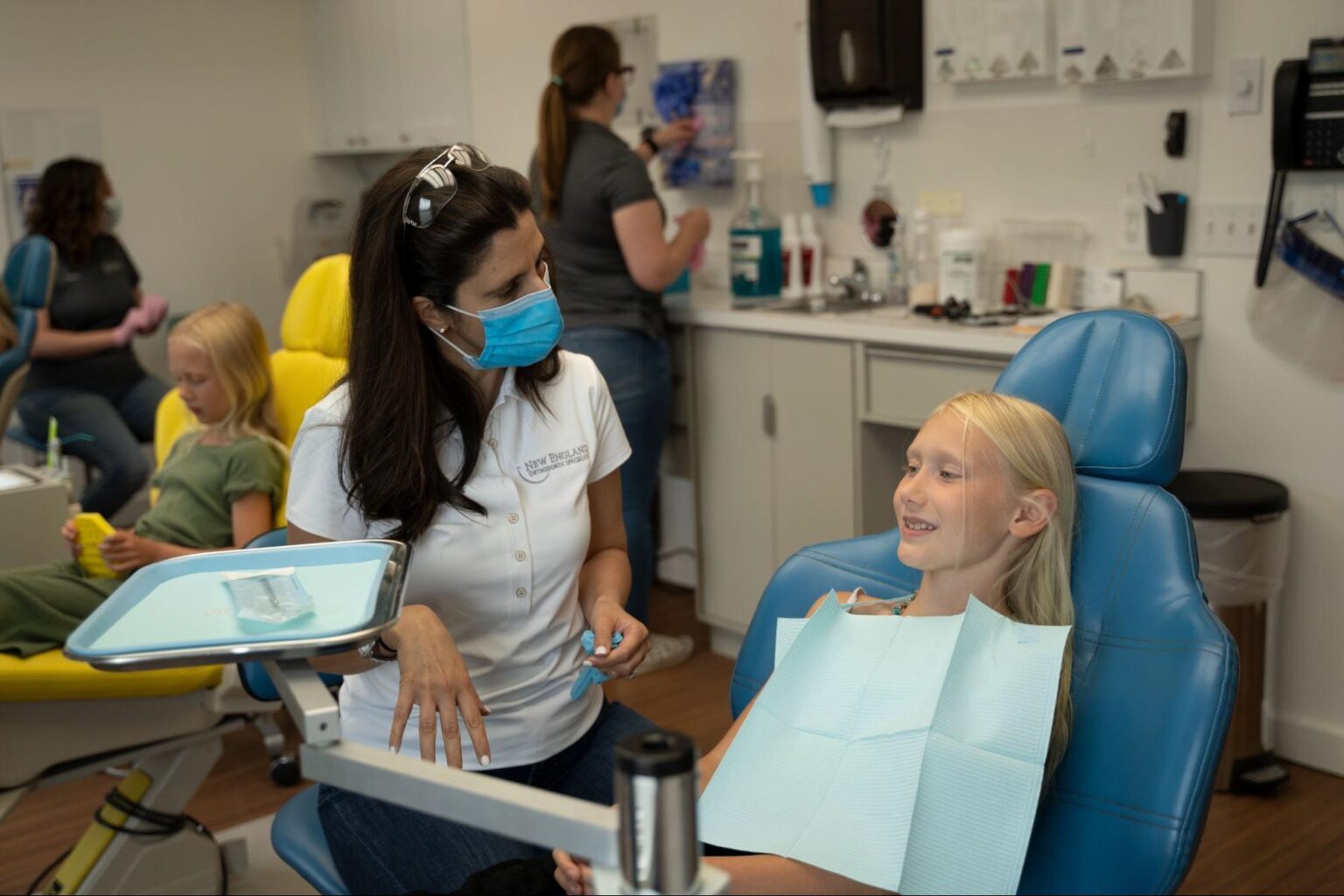
What Does an Orthodontist Do?
An orthodontist is a dental specialist who diagnoses and treats misaligned teeth, bite issues, and jaw irregularities. Unlike general dentists, orthodontic specialists complete two to three additional years of residency training focused specifically on moving teeth and guiding facial development. This specialized education prepares them to handle everything from simple crowding to complex bite corrections. Knowing what sets a specialist apart is the first step in making a confident choice for your family’s oral health.
At New England Orthodontic Specialists, your Marblehead orthodontist team includes Dr. Neil Flückiger and Dr. Diana Esshaki, offering treatment options including Invisalign clear aligners, clear braces, and metal braces. Both are board-certified by the American Board of Orthodontics, a credential that requires passing rigorous written and clinical examinations beyond standard residency training.
Orthodontic care isn’t just about straighter teeth. It’s about creating a healthier bite, improving your ability to chew and speak, and giving you a smile that boosts your confidence. Considering treatment for your child, your teen, or yourself? Orthodontic specialists are trained to treat patients of all ages. Families in the area have many choices, and learning the basics helps you ask the right questions when you meet with a provider.
How Orthodontic Treatment Works: Step by Step
Orthodontic treatment unfolds in five clear stages: a free consultation, a custom treatment plan, placement of braces or aligners, progress visits every four to eight weeks, and a retention phase to protect your results. Knowing what to expect at each stage makes the process feel much more manageable from day one.
Step 1: Your Free Consultation
Your free consultation includes a thorough exam, digital photos, and advanced imaging of your teeth and jaw. This gives your orthodontic specialist a complete picture of your oral health. You’ll talk through your goals and any concerns you have about treatment.
Step 2: Building a Custom Treatment Plan
Based on your exam results, your orthodontic specialist creates a custom treatment plan. You’ll learn which options work best for your situation, how long treatment should take, and what the cost looks like. At New England Orthodontic Specialists, you can even start your new smile the same day as your consultation.
Step 3: Getting Started
Choosing metal braces or clear braces? The brackets are bonded to your teeth in a single appointment. For Invisalign clear aligners, you’ll receive your first sets of custom aligners along with instructions for wearing them.
Step 4: Progress Visits
Plan to return to the office every four to eight weeks so your orthodontic specialist can monitor your progress and make adjustments. These appointments are usually quick, often under 30 minutes.
Step 5: Finishing Strong
Once your teeth reach their ideal positions, your braces come off or you finish your final aligner. Retainers come next, worn as directed to keep your results in place for years to come.
Benefits of Seeing an Orthodontic Specialist
Choosing a board-certified orthodontic specialist offers advantages that go beyond a straighter smile. Dr. Diana Esshaki and Dr. Neil Flückiger are both board-certified by the American Board of Orthodontics, having completed rigorous testing well above and beyond their residency training. That depth of credentialing gives families extra confidence when trusting a provider with their care.
How Does Treatment Improve Bite Function?
Properly aligned teeth meet correctly, making chewing more efficient and reducing strain on your jaw joints. Patients often find that meals become more comfortable once their bite has been corrected, and long-term jaw health improves as well.
Easier Daily Oral Hygiene
Straight teeth are easier to brush and floss, lowering your risk of cavities and gum disease. When teeth are crowded or overlapping, plaque hides in spots a toothbrush can’t easily reach, so straightening them makes daily care simpler.
Can Orthodontics Reduce Wear and Tear?
Correcting bite issues prevents uneven tooth wear, chips, and cracks over time. Without treatment, misaligned teeth can grind against each other in ways that shorten their lifespan.
Relief From Jaw Discomfort
Many patients notice relief from headaches, jaw clicking, and TMJ-related symptoms after treatment. While results vary, a balanced bite often takes pressure off the jaw joints and surrounding muscles.
How Does a New Smile Boost Confidence?
A smile you love can change how you feel in photos, at work, and in social situations. That confidence often shows up in unexpected ways, from job interviews to family gatherings to simply laughing more freely with friends.
Specialist Expertise You Can Trust
Orthodontic specialists handle complex cases daily, while general dentists handle them far less frequently. Working with board-certified orthodontists like Dr. Flückiger and Dr. Esshaki means your care is led by clinicians focused entirely on tooth movement and bite correction.
According to the American Association of Orthodontists, orthodontic issues left untreated can worsen over time and become more difficult to correct. Early evaluation and timely treatment can prevent bigger problems down the road.
Invisalign vs. Clear Braces vs. Metal Braces
Choosing between treatment options depends on your specific needs, lifestyle, and preferences. Here’s how the three main options compare:
| Feature | Invisalign Clear Aligners | Clear Braces | Metal Braces |
|---|---|---|---|
| Visibility | Nearly invisible | Tooth-colored brackets, less noticeable | Most visible option |
| Removability | Removable for eating and brushing | Fixed to teeth | Fixed to teeth |
| Comfort | Smooth plastic, no wires | Ceramic brackets may feel bulkier | Metal brackets and wires |
| Best For | Mild to moderate cases, self-disciplined wearers | Wanting discretion with a fixed appliance | Complex cases, all ages |
| Maintenance | Must remove for eating, clean aligners daily | Requires careful brushing around brackets | Requires careful brushing around brackets |
| Durability | Aligners replaced every 1-2 weeks | Ceramic can chip if not careful | Most durable option |
Invisalign clear aligners work well for teens and adults who want flexibility and discretion. You’ll wear the aligners around 20 to 22 hours daily, removing them only to eat and brush. Dr. Neil is a Diamond Invisalign Provider, recognized for treating a high volume of Invisalign cases each year.
Clear braces use tooth-colored ceramic brackets that blend with your smile. They’re a great middle ground for anyone who wants something less noticeable than metal but prefers a fixed appliance.
Metal braces remain the gold standard for complex cases. They’re highly effective, typically the most accessible option, and today’s brackets are smaller and more comfortable than ever.
Your orthodontic specialist will recommend the best option based on your case complexity, budget, and lifestyle during your consultation.
What Affects the Cost of Orthodontic Treatment?
The cost of orthodontic treatment depends on six main factors: case complexity, treatment type, length of treatment, insurance coverage, payment plan options, and retention. Each one shapes your total cost differently, and understanding how they fit together helps families plan ahead and avoid surprises.
Case Complexity
Minor crowding or spacing typically requires less treatment time than correcting a significant overbite, underbite, or crossbite. More complex cases need more appointments and longer treatment duration, which directly affects total cost.
Treatment Type
Metal braces are generally the most accessible option. Clear braces and Invisalign clear aligners often cost more due to the materials involved and the lab work required to produce custom aligner trays.
Treatment Length
Most orthodontic treatment takes between 12 and 24 months, though some cases finish sooner and others take longer. Extended treatment means additional appointments and adjustments along the way.
Insurance Coverage
Many dental insurance plans include orthodontic benefits that can significantly reduce your out-of-pocket costs. New England Orthodontic Specialists works with your insurance and will help you understand exactly what your plan covers before you commit.
Payment Plans
Flexible financing makes treatment accessible for kids and adults alike. Affordable payment plan options spread the cost over time, so you can start your new smile without waiting until you’ve saved the full amount.
Retention
Retainers are essential for maintaining your results. Some practices include them in the treatment fee, while others charge separately, so always ask up front so there are no surprises later.
The best way to understand your specific cost is to schedule a free consultation. You’ll receive a complete breakdown of pricing and payment options with no obligation.
Who Is a Good Candidate for Orthodontic Treatment?
Orthodontic treatment works for patients of all ages, at nearly every stage of life. Parents exploring early evaluation for a child have one set of considerations. Teens weighing options have another. Adults finally ready to act have their own. Here’s what matters at each stage:
When Should Kids Start?
The American Association of Orthodontists recommends children have their first orthodontic evaluation by age seven. At this age, your child has enough adult teeth for an orthodontic specialist to spot developing issues. Learn more about why age seven matters.
Early treatment isn’t always necessary, but when it is, it can:
- Guide jaw growth while bones are still developing
- Create space for crowded teeth
- Correct harmful habits like thumb sucking
- Reduce the need for extractions or surgery later
Why Are the Teen Years Ideal?
The teenage years are often the best time for orthodontic treatment. All adult teeth have typically come in, and the jaw is still adapting, which can make tooth movement more efficient. Teens have many options, from metal braces to Invisalign Teen.
Can Adults Benefit Too?
It’s never too late to get the smile you’ve always wanted. Adults make up a growing share of orthodontic patients, and options like Invisalign clear aligners and clear braces make treatment more discreet than ever. Plenty of working professionals and parents choose to start treatment well into adulthood.
What Issues Can Be Treated?
- Crowded or overlapping teeth
- Gaps between teeth
- Overbite (upper teeth protrude over lower)
- Underbite (lower teeth sit in front of upper)
- Crossbite (teeth don’t align properly when biting)
- Open bite (teeth don’t touch when mouth is closed)
Before starting treatment, you’ll need healthy teeth and gums. If cavities or gum disease are present, those issues should be addressed first.
Frequently Asked Questions
What does an orthodontist do?
An orthodontist diagnoses and treats misaligned teeth, bite issues, and jaw irregularities using tools like braces, clear aligners, and retainers. They complete extra years of specialty training beyond dental school, focusing entirely on tooth movement and facial development for patients of all ages.
How long does orthodontic treatment take?
Most patients wear braces or aligners for 12 to 24 months, though treatment length varies based on your specific needs. Minor corrections may finish in under a year, while complex cases can take longer. Your orthodontic specialist will give you a realistic timeline during your free consultation.
At what age should my child see an orthodontist?
The American Association of Orthodontists recommends an initial evaluation by age seven. This doesn’t mean treatment will start that early, but it lets the orthodontic specialist monitor development and step in if needed. Find out more about early orthodontic evaluations.
Does Invisalign work as well as braces?
For many cases, yes. Invisalign clear aligners effectively treat crowding, spacing, and various bite issues. However, some complex cases may respond better to braces. Your orthodontic specialist will recommend the option that will give you the best results.
Is orthodontic treatment covered by insurance?
Many dental plans include orthodontic benefits, especially for children under 18. Coverage varies widely between plans. New England Orthodontic Specialists works with your insurance and can help you understand exactly what your benefits include before you commit to treatment.
Will braces or aligners hurt?
You may feel some soreness for a few days after getting braces or starting new aligners. This discomfort is usually mild and manageable with over-the-counter relief. Most patients adjust quickly within a week.
How do I choose the right Marblehead orthodontist?
Look for board certification, which demonstrates advanced training and a commitment to high standards. Read reviews, ask about treatment options, and learn what to expect at your first visit. At New England Orthodontic Specialists, Dr. Diana and Dr. Neil welcome families to tour the office and meet the team before committing, so you feel comfortable and confident in your care.